Gg Allin

Before punk had rules, GG Allin tore them apart. He didn’t just cross lines, he smeared them across the walls. Part musician, part warning label, Allin turned rock into a full-contact sport that mixed blood, chaos, and shock with a hint of desperate honesty. His shows were riots waiting to happen, and his life played out like a dare he intended to lose. To some, he was the worst thing that ever happened to punk. To others, he was the only one honest enough to die for it.
How It All Started
Born Jesus Christ Allin in 1956 in Lancaster, New Hampshire, GG’s childhood was closer to a horror film than a coming-of-age story. His father believed he’d birthed a messiah, dug graves in the basement, and ruled their log-cabin home like a doomsday prophet. GG grew up with no electricity, no freedom, and no sense of safety. His brother, Merle, couldn’t pronounce “Jesus,” so “GG” stuck instead. By his teens, Allin was already rebelling against everything around him, stealing, fighting, and showing up to school in women’s clothes. He wasn’t looking for acceptance, just an audience.
Early Bands and the Start of Trouble
GG’s first bands—Little Sister’s Date, then Malpractice—were rough rehearsals for the storm to come. He played drums, worshiped Alice Cooper, and found inspiration in The Stooges and MC5. In 1977 he fronted The Jabbers, recording Always Was, Is and Always Shall Be, a surprisingly clean punk record considering what was coming next. But control was never in GG’s vocabulary. By 1984, his unpredictability tore The Jabbers apart. From that point on, his music would become more aggressive, his shows more violent, and his reputation radioactive.
When the Chaos Took Over
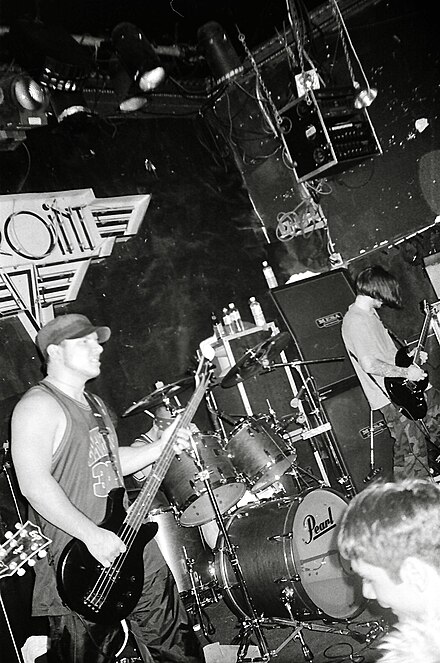
In 1985, GG turned a punk gig into a biological hazard when he defecated onstage in Illinois. What started as a gross-out stunt became his trademark. His sets blurred the line between art, assault, and self-destruction. He’d cut himself, bleed on fans, attack anyone close enough to touch him, and brag that he’d end his life live on stage. Fans came to see if this was the night he’d actually do it. He never did, but he made every performance look like it could be.
His albums from this period, like Eat My Fuc, Freaks, Faggots, Drunks & Junkies, and The Suicide Sessions, were barely listenable by normal standards, but they didn’t need to be. They were documents of a man burning down his own mythology. Somewhere between the filth and fury, he recorded country songs inspired by Hank Williams Sr., his hero and mirror image. His acoustic record The Troubled Troubador and later Carnival of Excess revealed a strange, broken honesty that made sense only in the context of someone who had seen the bottom and decided to stay there.
Prison, The Manifesto, and the Spiral
In 1989, GG was arrested in Michigan after a violent sexual encounter that led to charges of assault. He claimed it was consensual. The judge called it criminal. He served time in prison until 1991, where he wrote The GG Allin Manifesto, a rambling document mixing nihilism, self-mythology, and declarations of war against society. When he got out, he seemed more determined than ever to turn life into performance art. He appeared on talk shows like Geraldo and Jane Whitney, threatening audiences, calling himself a prophet, and promising on-stage suicide. Instead, he just kept self-destructing slower.
The Final Show
On June 27, 1993, GG played his last set at a tiny Manhattan club called The Gas Station. He made it through three songs before everything collapsed into a brawl. Shirtless, bleeding, and covered in filth, he led his fans into the streets of New York like a demented Pied Piper. Hours later, he overdosed on heroin in a friend’s apartment and was found dead the next morning. He was 36.
Aftermath and Infamy
GG’s funeral was as unhinged as his life. His body was dressed in leather and a jockstrap, surrounded by booze and chaos, as fans took photos with the corpse. His grave became a target for vandalism until the tombstone was finally removed in 2010. Over time, documentaries like Hated: GG Allin and the Murder Junkies and GG Allin: All in the Family tried to make sense of his life, but there may not be sense to find. He was equal parts performance and pathology, mixing rebellion with genuine psychosis.
Discography
- Always Was, Is and Always Shall Be (1980)
- Eat My Fuc (1984)
- You’ll Never Tame Me (1985)
- Freaks, Faggots, Drunks & Junkies (1988)
- The Suicide Sessions (1989)
- Murder Junkies (1991)
- Brutality and Bloodshed for All (1993)
- Carnival of Excess (1995)
Why He Still Haunts Punk
GG Allin didn’t leave behind a catalog of hits or a message that anyone could comfortably repeat. What he left was a warning: that punk, if it ever stopped being dangerous, would stop meaning anything. He was the extreme endpoint of the genre, the one who tested how far rebellion could go before it destroyed itself. Whether people see him as a lunatic, a prophet, or both, one thing is certain—no one who saw GG Allin ever forgot it.