Good Riddance
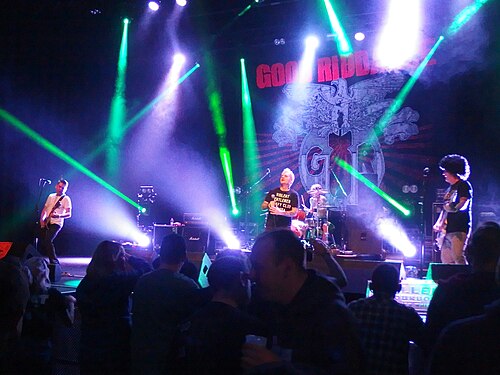
Good Riddance built a legacy out of speed, conviction, and conscience. Coming out of Santa Cruz, California, they helped shape melodic hardcore’s identity through political lyrics and breakneck tempos, showing that punk could be both furious and thoughtful. Their mix of skate-punk precision and hardcore urgency made them one of the defining bands on Fat Wreck Chords, and decades later, they still sound like a band that refuses to look the other way.
How the Band Got Started
The seeds of Good Riddance were planted in 1986 when singer Russ Rankin decided punk rock needed more purpose than posturing. The band didn’t solidify until guitarist Luke Pabich joined a few years later, giving Rankin a musical counterpart who could match his intensity. Their early recordings, including the Gidget EP on Little Deputy Records in 1993, hinted at the combination of melody and rage that would define them. Bassist Devin Quinn and drummer Rich McDermott rounded out that first version of the band before the rhythm section shifted—first with Chuck Platt taking over on bass and later Sean Sellers on drums, forming what most fans recognize as the classic lineup.
By 1995, Good Riddance had signed to Fat Wreck Chords, joining a roster that was reshaping punk for a new generation. Their debut, For God and Country, set the tone immediately: fast, pointed, and politically charged. It was a declaration that punk could be melodic without losing its teeth.
The Rise of Melodic Hardcore
Good Riddance hit their stride with 1996’s A Comprehensive Guide to Moderne Rebellion, a record that found the perfect middle ground between punk hooks and hardcore urgency. Sellers’ drumming gave the songs new propulsion, while Rankin’s lyrics tackled hypocrisy, capitalism, and inner conflict with razor precision. Tracks like “Weight of the World” and “Last Believer” became instant classics in the Fat Wreck universe—songs that turned frustration into motivation.
The late ’90s saw them evolve even further. Ballads from the Revolution (1998) balanced aggression with melody, while Operation Phoenix (1999) delivered pure fire, produced by Bill Stevenson and Stephen Egerton of Descendents and ALL. It was relentless and introspective all at once, the kind of record that made you think while you shouted along. By the time 2001’s Symptoms of a Leveling Spirit arrived, Good Riddance had become a thinking person’s punk band—angry at injustice, but grounded in realism rather than slogans.
Bound by Ties of Belief and Affection
The early 2000s brought a more reflective side to their writing. Bound by Ties of Blood and Affection (2003) showed maturity without mellowing out. Rankin, a vegan and Green Party supporter, channeled his activism into personal conviction rather than political preaching. Every member of Good Riddance lived their ideals—veganism, animal rights, and social awareness weren’t marketing angles; they were part of the band’s DNA.
Meanwhile, members pursued other projects without slowing down. Rankin formed Only Crime with Bill Stevenson, Sellers played with The Real McKenzies, and Platt joined I Want Out. Still, when the four came together, the chemistry was undeniable. Their seventh album, My Republic (2006), felt like a band rediscovering its purpose right before walking away.
The Farewell and Reunion
In 2007, after two decades of uncompromising work, Good Riddance announced their breakup. Their final show at The Catalyst in Santa Cruz felt like a full-circle moment—ending where it all began. The performance was recorded and released as Remain in Memory – The Final Show, capturing every ounce of their raw energy and gratitude for a scene that had grown up with them.
But punk bands rarely stay gone forever, and Good Riddance proved it. In 2012, Rankin, Pabich, Platt, and Sellers reunited, picking up right where they left off. Their eighth studio album, Peace in Our Time (2015), arrived like a statement of calm defiance, balancing aggression with melody and experience. It reminded fans that wisdom and fury could coexist without compromise.
Thoughts and Prayers and the Modern Era
In 2019, Good Riddance returned with Thoughts and Prayers, a record that showed zero signs of rust. It’s a sharp, unflinching look at the modern world, tackling disinformation, nationalism, and personal despair with clarity. Rankin’s lyrics have only sharpened with age, and the band’s sound remains tight, aggressive, and full of conviction. It’s not nostalgia—they’re still holding a mirror to the world, and the reflection isn’t pretty.
Why They Still Matter
Good Riddance represents punk’s conscience. They never chased trends, never watered down their message, and never stopped believing that music could matter. Their mix of speed, melody, and integrity influenced countless bands that came after—from Phinius Gage to No Trigger—and their songs remain as urgent today as they were in the 1990s. For fans who grew up on their records, every new release feels like a reminder that punk’s heart still beats in Santa Cruz.
Members
- Russ Rankin – vocals (1986–2007, 2012–present)
- Luke Pabich – guitar (1990–2007, 2012–present)
- Chuck Platt – bass (1994–2007, 2012–present)
- Sean Sellers – drums (1996–1999, 2006–2007, 2012–present)
Discography
- For God and Country (1995)
- A Comprehensive Guide to Moderne Rebellion (1996)
- Ballads from the Revolution (1998)
- Operation Phoenix (1999)
- Symptoms of a Leveling Spirit (2001)
- Bound by Ties of Blood and Affection (2003)
- My Republic (2006)
- Peace in Our Time (2015)
- Thoughts and Prayers (2019)