Minor Threat
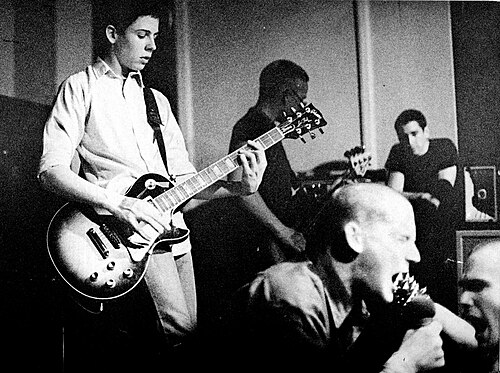
Minor Threat were an American hardcore punk band formed in 1980 in Washington, D.C. Built by vocalist Ian MacKaye and drummer Jeff Nelson, the group moved fast, played harder, and wrapped up their run after only a few years. Even with a short lifespan, their recordings and their approach to running a band helped define what early U.S. hardcore looked and sounded like.
How The Band Came Together In D.C.
Before Minor Threat, MacKaye and Nelson played together in the Teen Idles while they were still in high school. After that band ended, they used the money they had earned to start Dischord Records, a label created to release their own music and support the local scene. With a fresh label in place and no interest in waiting for anyone’s permission, they pulled in guitarist Lyle Preslar and bassist Brian Baker and began rehearsing as Minor Threat.
The band’s first show took place in December 1980 in a basement in front of about fifty people, sharing a bill with several D.C. bands. From the start, Minor Threat played at a speed that felt like a dare. The songs were short, the sets were tight, and the message was direct enough that you could catch it even if you were standing behind a pillar with the monitors blowing your hair back.
Early Releases And The First Wave Of Shows
In 1981, Minor Threat released two 7-inch EPs, Minor Threat and In My Eyes. Those records helped the band spread quickly beyond D.C. They began touring the East Coast and the Midwest, building their name through shows rather than hype. Their recordings came out on Dischord, keeping the whole operation local, hands-on, and under their control.
“Straight Edge” And What People Did With It
One of the band’s best-known songs, “Straight Edge,” laid out MacKaye’s personal choice to avoid alcohol and drugs. The song was written as a first-person statement, not as a rulebook. Still, plenty of listeners treated it like a blueprint and began framing it as a wider identity. The band pushed back on the idea that they were creating a movement, but the song had already taken on a life of its own.
That tension between personal voice and public interpretation shows up again in “Out of Step.” The chorus is blunt and repetitive for a reason, because it is meant to sound like someone refusing to go along with the crowd. Later, when the band re-recorded “Out of Step” for the LP, MacKaye made the first-person framing more explicit and the record includes a spoken message stressing that the song is not a list of commands.
Expanding The Lineup And The Out Of Step Era
Minor Threat briefly paused when Preslar left to attend college for a semester. During that stretch, MacKaye and Nelson recorded material under the name Skewbald or Grand Union, a studio-only project that reflected their growing disagreements. Brian Baker also stayed active by playing with other D.C. bands for short periods.
In March 1982, Preslar returned and the band restarted with an expanded lineup. Steve Hansgen joined on bass, and Baker switched to second guitar. With two guitars, the band had more room to cut and weave without losing speed. The Out of Step LP became the centerpiece of this period, capturing both the band’s musical focus and the arguments simmering underneath it.
Breakup And The Final Show
Minor Threat split in 1983. By that point, the band members wanted different things from the next step. Preslar and Baker were listening to more melodic rock and wanted to pull the band in that direction, while MacKaye was focused on keeping the band grounded in the local community and the larger Dischord network. The gap only widened as rehearsals became harder to organize and the internal mood turned sour.
The band played their final show on September 23, 1983 at the Lansburgh Cultural Center in Washington, D.C. The bill also included Trouble Funk and the Big Boys, which made the night feel less like a genre-only event and more like a real D.C. mix of sounds and scenes. Minor Threat closed their set with “Last Song,” which was about as subtle as a brick through a window, and that was the point.
After Minor Threat
After the breakup, Dischord continued releasing music and became a lasting base for bands in and around Washington, D.C. MacKaye moved on to Embrace, Egg Hunt, and later Fugazi, along with other projects across the years. Brian Baker played in a long list of bands, including Dag Nasty and Government Issue, and later joined Bad Religion. Lyle Preslar did more music work, then shifted into label and industry roles, and later moved into law. Jeff Nelson played in other groups for a time, then focused more on label work and publishing while staying active in political causes. Steve Hansgen formed Second Wind and later worked as a producer.
Compilations And Archival Releases
In 1984, the EPs Minor Threat and In My Eyes were compiled and released as the Minor Threat album. In 1989, Complete Discography collected the band’s core recordings into one release, and later archival material like First Demo Tape surfaced as well. The point of these releases was simple: keep the music available, keep it in print, and keep it out of the hands of people who would rather sell a story than a record.
Misread Lyrics And A Long Shadow
Some Minor Threat songs became lightning rods. “Guilty of Being White” in particular drew criticism from people who read it as racist. MacKaye has repeatedly rejected that interpretation, explaining it as a personal account rooted in his experiences at school and the way identity and blame were handled around him. The song later gained another layer of controversy when Slayer covered it and changed the final line, which only added fuel to arguments the band never asked for in the first place.
Brand Conflicts And Permission Done Right
Decades later, the band’s name and imagery kept showing up in places that had nothing to do with a sweaty room in D.C. In 2005, Nike used a visual closely tied to the band for a skateboarding campaign, including a modified version of the logo. The band and Dischord publicly objected, and Nike issued an apology and pulled the material they could recover.
Other uses landed differently. A small food company once asked to use Minor Threat-related art for a hot sauce label, and MacKaye agreed with the condition that the design be adjusted. That small detail matters, because it shows the difference between taking and asking. It also shows the difference between cashing in and being decent.
Sound, Approach, And Why It Still Connects
Minor Threat’s songs are often under two minutes and built for impact. The tempos are high, the riffs are sharp, and the lyrics come out like a direct conversation that refuses to soften its edges. Their records also reflect a clear approach to how a band can operate: record cheaply, release your own work, book shows with your community, and keep the power close to the people making the music.
Members
- Ian MacKaye, lead vocals (1980–1983)
- Lyle Preslar, guitar (1980–1983)
- Brian Baker, bass (1980–1982, 1983), guitar (1982–1983)
- Jeff Nelson, drums (1980–1983)
- Steve Hansgen, bass (1982–1983)
Discography
- Minor Threat 7-inch (1981)
- In My Eyes 7-inch (1981)
- Out of Step 12-inch (1983)
- Salad Days 7-inch (1985)