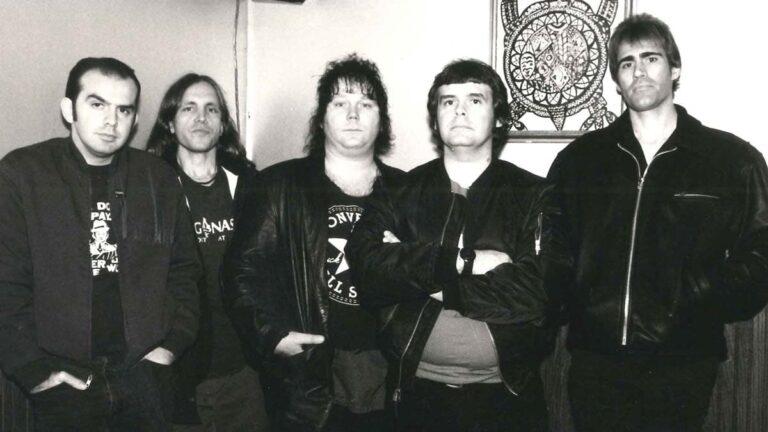
Hüsker Dü

Hüsker Dü was a band from Saint Paul, Minnesota that started out playing blisteringly fast hardcore and gradually opened their sound into melodic, emotionally heavy rock without losing the energy that pulled people in.
How The Band Got Started
The group formed in 1979 when guitarist and vocalist Bob Mould, bassist Greg Norton, and drummer and vocalist Grant Hart came together in Saint Paul. At first they played at extreme speeds, fueled by the early hardcore wave and the simple joy of cramming as many notes as possible into a song. The name came from a Scandinavian board game, a small clue that they were comfortable with odd references. :contentReference[oaicite:29]{index=29}
They released early material through their own label, Reflex Records, which gave them full control over what they put out and how it reached listeners. Regional shows and relentless touring soon followed, connecting them with other independent bands and labels across the United States.
As writers, Mould and Hart quickly pushed past basic hardcore templates. Even on early releases you can hear them pulling in melody, different tempos, and lyrics that dug into personal struggle, memory, and everyday frustration instead of just slogans.
Key Releases and Career Growth
Their debut studio album, Everything Falls Apart, came out in 1983 on Reflex Records. It captured much of their early speed while hinting at the broader songwriting that would define later records. The band then signed with SST Records, which released a run of albums and an EP that helped shape independent guitar music in the 1980s. :contentReference[oaicite:30]{index=30}
Zen Arcade, released in 1984 on SST, was the turning point. A sprawling, concept driven double album, it followed a loose story of a young man leaving home and confronting a harsh world. Musically it stretched from hardcore blasts to acoustic passages and noisy experiments, proving that their sound could hold a lot more than breakneck riffs. :contentReference[oaicite:31]{index=31}
They followed it with albums such as New Day Rising (1985) and Flip Your Wig (1985), which pushed further into melodic territory while keeping the distortion levels high. Songs became more structured, vocals more tuneful, and the production slightly clearer, all while retaining the urgency that set them apart from more polished rock acts.
In 1986 Hüsker Dü signed with Warner Bros. Records, one of the first bands from the American punk underground to jump to a major label without making dramatic changes to their sound. They released two albums there, including Candy Apple Grey and Warehouse: Songs and Stories, which continued to blend tuneful songwriting with the rough edges of their earlier years. The move proved that a band rooted in independent circles could work with a major label while staying recognizable. :contentReference[oaicite:32]{index=32}
Despite the creative output, internal tension and heavy touring took a toll. Hart and Mould shouldered most of the writing, each bringing distinct voices to the band. As the decade wore on, personal issues, including Hart’s struggles with addiction, and disagreements about direction made it difficult to keep going. The band officially disbanded in 1988.
Members
- Bob Mould – guitar and vocals, co principal songwriter whose baritone delivery and sharp riffs defined much of the band’s sound
- Grant Hart – drums and vocals, co principal songwriter with a higher pitched voice and a knack for melodic, bittersweet songs
- Greg Norton – bass, whose playing locked down the low end and whose handlebar mustache became an unofficial visual trademark
Discography
- Everything Falls Apart (1983) – debut studio album on Reflex Records, capturing their transition from pure speed to broader ideas.
- Zen Arcade (1984) – ambitious double album on SST that mixed hardcore, melody, and experimental tracks around a loose narrative.
- New Day Rising (1985) – continued their blend of noise and tuneful songwriting with a slightly more concise approach.
- Flip Your Wig (1985) – another SST release that sharpened their pop instincts without sanding down the guitars.
- Candy Apple Grey (1986) – first major label album on Warner Bros., featuring both loud rockers and quieter, introspective songs.
- Warehouse: Songs and Stories (1987) – double album on Warner Bros. that would be their final studio release before the breakup.