Corrosion Of Conformity
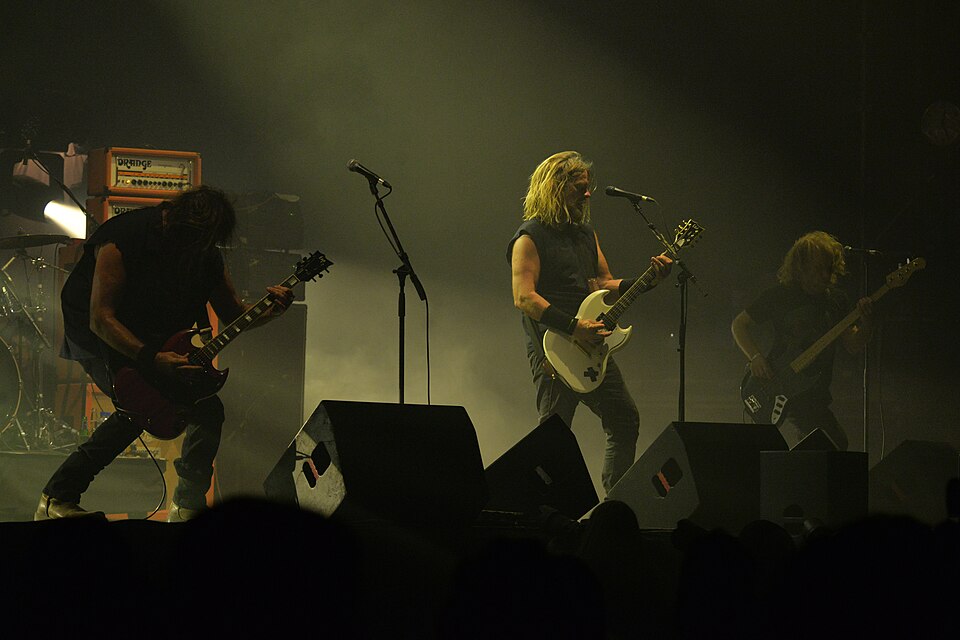
Corrosion of Conformity (also known as C.O.C.) is an influential American heavy metal band hailing from Raleigh, North Carolina. Formed in 1982, the band has seen multiple lineup changes over the years, but lead guitarist Woody Weatherman has remained the sole constant member. Throughout its history, Corrosion of Conformity has been most notably associated with its “classic” lineup, which includes Weatherman, founding bassist Mike Dean, drummer Reed Mullin, and vocalist/rhythm guitarist Pepper Keenan, who joined the band in 1989. After a hiatus in 2006, the band returned in 2010, albeit without Keenan, who was focusing on his work with Down. The group announced Keenan’s return in 2014. Unfortunately, after Mullin’s passing in 2020, John Green replaced him as the drummer, while Dean left the band once more in 2024. Despite these changes, the band continues to evolve and create new music.
How The Band Got Started
Initially a hardcore punk act, Corrosion of Conformity gradually transitioned into a slower, blues-influenced heavy metal band. To date, they’ve released ten studio albums, four EPs, one compilation, and one live album. Their early albums, Eye for an Eye (1984), Animosity (1985), and Blind (1991), garnered attention from Columbia Records, which signed the band in 1993. Their breakthrough came with Deliverance (1994), which hit No. 155 on the Billboard 200, spurred by hit singles like “Albatross” and “Clean My Wounds”. The band’s 1996 album, Wiseblood, became their highest-charting album at the time, peaking at No. 104 on the Billboard 200. The most recent album, No Cross No Crown (2018), marked their first entry into the top 100 of the Billboard 200, peaking at No. 67.
How The Band Got Started
Corrosion of Conformity was founded in 1982 in Raleigh, North Carolina, by bassist Mike Dean, guitarist Woody Weatherman, drummer Reed Mullin, and vocalist Benji Shelton. Influenced by a blend of heavy metal giants like Black Sabbath and Judas Priest, and hardcore punk icons such as Black Flag and Minor Threat, their sound was a potent mixture of both genres. Their early efforts included tracks on local compilations like the No Core cassette (1982) and the “Why Are We Here?” 7″ (1983).
After Shelton’s departure in 1983, the band briefly recruited Robert Stewart to take over as vocalist, but he stayed only a month. The band then brought in Eric Eycke, who would sing on their debut full-length, Eye for an Eye, released in 1984. This album marked C.O.C.’s hardcore punk debut with 20 intense tracks. The band then experienced another lineup change as Eycke left, and C.O.C. continued as a trio. On their follow-up album, Animosity (1985), Dean and Mullin shared vocal duties.
After the album’s release, Metal Blade Records offered little promotional support, prompting Dean to leave the band in 1987. The remaining members recruited Simon Bob Sinister as a temporary bassist, and they released the Technocracy EP in 1987 to fulfill their contractual obligations to Metal Blade. However, the band eventually disbanded due to dissatisfaction with the label and the band’s internal struggles.
Blind, Deliverance, and Wiseblood (1989–1998)
In 1989, Weatherman and Mullin decided to revive the band. After posting an ad for a vocalist with a sound similar to James Hetfield or Ozzy Osbourne, they recruited Karl Agell on vocals, Phil Swisher on bass, and Pepper Keenan as a second guitarist. The band signed to Caroline Records, and in 1991, they released Blind, which was their first album to receive significant mainstream attention. The video for “Vote with a Bullet” received MTV airplay, and the album cracked the Billboard Heatseekers chart in early 1992.
In 1993, Agell and Swisher left the band, and Dean returned to take over bass duties. Keenan also took over lead vocals. The band’s next album, Deliverance, saw them incorporating Southern rock and stoner metal influences into their sound, a style that would characterize their future work. The album’s singles, “Albatross” and “Clean My Wounds,” became Top 20 hits on rock radio, making it the band’s most commercially successful release. It spent several months on the Billboard 200 and peaked at No. 155.
The band followed up with Wiseblood in 1996. Though the album produced the radio hit “Drowning in a Daydream” and saw the band touring with Metallica, it failed to achieve the same level of commercial success as Deliverance. However, “Drowning in a Daydream” was nominated for a Grammy Award for Best Metal Performance in 1998.
America’s Volume Dealer and In the Arms of God (1999–2006)
After Wiseblood, Corrosion of Conformity signed with Sanctuary Records and released America’s Volume Dealer in 2000. Despite the single “Congratulations Song” making its way to the Top 30, the album failed commercially. This period also saw several drummers filling in for Mullin, who left the band in 2001. By 2005, the band released In the Arms of God, which garnered much more critical praise than their previous album and debuted at No. 108 on the Billboard 200. A video for “Stonebreaker” received rotation on MTV2’s Headbanger’s Ball. The band went on extensive tours with the likes of Motörhead, Disturbed, and Fu Manchu.
Second Hiatus (2006–2010)
Corrosion of Conformity entered a second hiatus in 2006 while Keenan focused on his work with Down. During this time, various members of the band were involved in side projects. From 2009 to 2010, the band’s “Blind” lineup performed under the name C.O.C.-Blind, and members participated in the formation of “Righteous Fool,” releasing an EP through Southern Lord Records.
Animosity Lineup Reunion and New Releases (2010–Present)
In 2010, Corrosion of Conformity reunited the classic Animosity lineup, consisting of Dean, Mullin, Weatherman, and Keenan. They released their self-titled album in 2012, followed by a five-song EP, Megalodon, in 2012, available for free download. In 2014, they released their ninth studio album, IX, which further solidified the band’s signature sound.
Reunion with Pepper Keenan and No Cross No Crown (2014–2019)
In 2015, Corrosion of Conformity reunited with Pepper Keenan to record a new album and began touring once again. The band’s tenth studio album, No Cross No Crown, was released in 2018, marking the band’s first entry into the Billboard Top 100, where it peaked at No. 67. The band toured extensively to support the album, reconnecting with their fans and solidifying their legacy as one of metal’s most respected acts.
Death of Reed Mullin and Mike Dean’s Departure (2020–Present)
Tragically, drummer Reed Mullin passed away on January 27, 2020. John Green, a former roadie for the band, replaced him shortly afterward. In September 2024, bassist Mike Dean announced his departure for the second time, citing his difficulty coping with Mullin’s passing and the challenges of living far from the band. Corrosion of Conformity plans to continue with a new bassist and are preparing to release new music in 2025.
Members
- Woody Weatherman – lead guitar, backing vocals (1982–present)
- Pepper Keenan – rhythm guitar, lead vocals (1989–2006, 2015–present), backing vocals (1989–1993)
- John Green – drums (2018–present; touring)
- Bobby Landgraf – bass (2024–present)
Discography
Studio Albums
- Eye for an Eye (1984)
- Animosity (1985)
- Blind (1991)
- Deliverance (1994)
- Wiseblood (1996)
- America’s Volume Dealer (2000)
- In the Arms of God (2005)
- Corrosion of Conformity (2012)
- IX (2014)
- No Cross No Crown (2018)