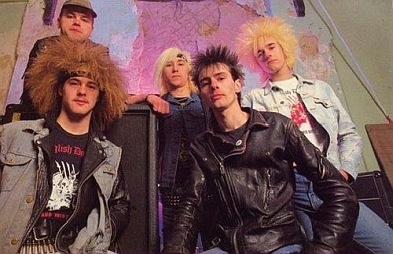
Fugazi

In a city already known for changing punk forever, Fugazi showed what came next. Formed in Washington, D.C. in 1986, the band took hardcore’s intensity, fused it with thought, discipline, and melody, and built an entirely new world of sound and ethics. Ian MacKaye, Guy Picciotto, Joe Lally, and Brendan Canty didn’t just play music—they built a movement. They made punk intelligent without making it pretentious, fierce without being reckless, and political without preaching. They turned independence into an art form.
How The Band Got Started
After the collapse of Minor Threat, Ian MacKaye wanted to keep creating music that mattered, but he was tired of the chaos that came with bands built on ego or scene politics. He connected with Joe Lally, a bassist working as a roadie for Beefeater, and they began jamming in late 1986. Colin Sears from Dag Nasty joined them on drums, but his stay was brief. When he left, Brendan Canty of Rites of Spring stepped in, locking down the foundation. Guy Picciotto, another Rites of Spring veteran, had been quietly orbiting the group, intrigued. By 1987, he joined full-time, completing the lineup that would go on to rewrite punk history.
The name “Fugazi” came from Mark Baker’s book Nam, a slang acronym used by Vietnam War soldiers meaning “Fouled Up, Got Ambushed, Zipped In.” It was a fitting title for a band born from disillusionment but powered by creative control.
The Early Years
Fugazi’s first show took place at the Wilson Center in D.C. in September 1987. The band moved fast, releasing their debut self-titled EP in 1988 on Dischord Records. It was produced by Ted Niceley and recorded with Don Zientara, the engineer who would become a lifelong collaborator. They hit the road immediately, touring relentlessly across the U.S. and Europe. The follow-up EP, Margin Walker (1989), captured a more refined version of their sound. Both EPs were later combined into the compilation 13 Songs, which became an underground staple and one of the most respected punk releases of the late 1980s.
Repeater and Steady Diet of Nothing
By 1990, Fugazi had grown from local legend to international force. Their first full-length album, Repeater, arrived with purpose. It was sharp, political, and melodic without softening the punch. Tracks like “Merchandise” and “Blueprint” turned anti-consumerism into poetry. Despite no label backing or major promotion, the record sold over 300,000 copies, a staggering feat for an independent release. Fugazi toured 250 shows between 1990 and 1991, packing thousand-capacity rooms worldwide. Major labels came calling with multimillion-dollar offers. The band didn’t even blink—they stayed with Dischord.
The 1991 follow-up, Steady Diet of Nothing, took a more introspective turn. The band produced it themselves, creating an austere sound that favored tension over explosiveness. It was slower, darker, and deeper. While some listeners missed the immediacy of Repeater, the album solidified Fugazi’s reputation as musicians who made exactly what they wanted, never what was expected.
In On The Kill Taker and Red Medicine
In 1993, Fugazi recorded In On The Kill Taker. Their first attempt, recorded by Steve Albini, didn’t meet their standards, so they re-recorded it with Niceley and Zientara. The final result was an eruption of precision and power. It charted on Billboard, pulled rave reviews from major outlets, and made Fugazi a headline act without selling out. Ahmet Ertegun of Atlantic Records personally offered them over $10 million to sign. They turned it down on the spot.
Red Medicine followed in 1995. The band produced it themselves and used the studio as an instrument—layering, experimenting, and stretching their sound into unexpected territory. Songs like “Do You Like Me” and “Target” blurred the line between punk and art rock. It was the record that made Fugazi as comfortable in avant-garde circles as they were in basements and community halls. Over the next two years, they toured 172 shows worldwide and built an almost mythic reputation for their live performances.
End Hits and The Argument
After an exhausting global tour, Fugazi returned home and began recording End Hits in 1997. The album title was tongue-in-cheek, a jab at rumors that they were done. It was heavy, textured, and unconventional, with moments of quiet minimalism tucked between explosions of rhythm. Critics were divided, but the record expanded their palette even further. On stage, they brought in Jerry Busher as a second drummer to replicate the dense percussion live.
In 2001, they released what would be their final studio album to date, The Argument. It was a masterclass in restraint and songwriting. Every track—“Full Disclosure,” “Epic Problem,” “Argument”—felt surgically constructed yet emotionally raw. It was Fugazi grown up but still defiant, refusing nostalgia or complacency. Many fans consider it their peak. Soon after touring the album, the band quietly hit pause.
The Indefinite Hiatus
In 2003, after a final run of shows that included three sold-out nights at London’s Forum, Fugazi went on an “indefinite hiatus.” There was no breakup, no fallout. Just four musicians recognizing life’s new rhythms. Since then, they’ve occasionally played together privately. The offers to reunite—some of them astronomical—keep coming. Each time, they’ve declined. As Ian MacKaye once said, “We’d only play music together if we wanted to play music together.”
Other Projects
Even while Fugazi rested, its members stayed active. Ian MacKaye formed The Evens with Amy Farina, and later Coriky with Farina and Lally. Brendan Canty scored films, worked on the Burn to Shine series, and co-founded Deathfix before reuniting with Lally in The Messthetics. Joe Lally released three solo records and collaborated with John Frusciante and Josh Klinghoffer in Ataxia. Guy Picciotto became a respected producer, working with Blonde Redhead, The Blood Brothers, and Vic Chesnutt. Even when apart, the spirit of Fugazi—the collaboration, experimentation, and independence—never stopped moving.
Fugazi Live Series
Fugazi’s live history is as monumental as their studio work. Between 1987 and 2003, they performed more than 1,000 shows across every U.S. state and around the world. They recorded over 800 of them. In 2004, Dischord began releasing these recordings as the Fugazi Live Series, an archive project that documented the raw, unfiltered sound of their performances. By 2011, fans could download hundreds of complete sets, each one capturing every shout, feedback burst, and audience exchange. In 2025, the band began releasing complete concerts on streaming platforms and Bandcamp, starting with their first show at the Wilson Center in 1987 and their final show at The Forum in London in 2002.
Musical Style
Fugazi’s sound defied classification. Critics called it post-hardcore, art punk, alternative rock, experimental, or all of the above. The band blended hardcore’s directness with dub, funk, and off-kilter rhythms. Their guitars interlocked like moving machinery—Picciotto’s sharp, angular playing cutting through MacKaye’s thick chords. Lally’s bass anchored the chaos with dub-inspired grooves, while Canty turned drums into architecture. Their songs weren’t written as traditional verse-chorus structures but as evolving blueprints built through improvisation and collaboration. They could be crushingly loud or eerily quiet, often within the same song.
Lyrics swung between MacKaye’s anthemic shouts and Picciotto’s cryptic abstractions. Together, they covered everything from consumerism and violence to community and self-discipline. By Red Medicine and The Argument, they had turned minimalism and experimentation into emotional language. Spin Magazine later ranked MacKaye and Picciotto together among the top 100 guitarists of all time for their dual interplay that blurred the line between rhythm and lead.
Ideology and Ethics
Fugazi’s moral compass was as integral as their sound. They turned down every major label offer and refused sponsorship deals. They played all-ages shows and kept ticket prices low—famously aiming for $5. They didn’t sell T-shirts or merchandise, believing it distracted from the music. They booked tours themselves, often performing in unconventional spaces like church basements, art galleries, and community halls. Violence at shows was shut down immediately. Ian MacKaye would pause mid-song to politely tell someone to calm down or leave, often giving them a refund envelope on the way out.
To protect themselves from lawsuits without becoming corporate, they founded Lunar Atrocities Ltd.—a small legal shell that existed purely to keep them self-sufficient. The result was a band that proved independence wasn’t a phase. It was a sustainable business model. Their commitment to community and conscience reshaped how countless artists approached music and money.
Influence and Legacy
Fugazi’s influence ripples across generations. Their approach to sound, ethics, and business inspired bands from Nirvana and Refused to Thursday, At the Drive-In, and Rage Against the Machine. Kurt Cobain was photographed wearing shoes with “Fugazi” scribbled on them. Eddie Vedder called seeing them live “a life-changing experience.” Joe Strummer of The Clash hailed them as the band carrying punk’s spirit forward. From post-hardcore acts like Quicksand, Cursive, and Braid to experimental artists like Arcade Fire, Godspeed You! Black Emperor, and Bon Iver, Fugazi’s fingerprints are everywhere.
Even musicians far outside punk have cited them: Jack White, Elliott Smith, Hayley Williams, Justin Vernon, and Lorde among them. Their refusal to compromise became a blueprint for independence in modern music. Jeff Rosenstock, who built his career around the same DIY ethics, once said Fugazi showed that “you don’t need permission to do it right.” They didn’t just influence sound—they influenced structure, community, and conviction.
Members
- Ian MacKaye – vocals, guitar, piano (1986-2003)
- Guy Picciotto – vocals (1988-2003), guitar (1989-2003)
- Joe Lally – bass (1986-2003), vocals (1995-2003)
- Brendan Canty – drums, piano (1987-2003)
Former Members
- Colin Sears – drums (1986)
Touring Musicians
- Jerry Busher – additional drums, percussion, trumpet (1998-2002)
Discography
- Repeater (1990)
- Steady Diet of Nothing (1991)
- In on the Kill Taker (1993)
- Red Medicine (1995)
- End Hits (1998)
- The Argument (2001)
The Story After The Noise
Fugazi never officially ended, and that’s part of their legend. They didn’t fade out or burn out. They simply chose silence when there was nothing left to say. The band’s archive continues to grow, and the influence hasn’t dimmed. For every artist who questions the system, keeps control of their work, or plays a $5 show, there’s a piece of Fugazi in it. They turned independence into art and left behind a manual on how to make music matter.