Gogol Bordello

Gogol Bordello didn’t crawl out of a basement or start in a dingy rehearsal space like most punk bands. They were born from an explosion of cultures, languages, and sheer chaos. Formed in New York City in 1999, this band is less a group and more a global caravan of sound, built around frontman Eugene Hütz, a Ukrainian-born force of nature who turned punk into a passport. With a rotating cast of musicians from every corner of the world, Gogol Bordello created a new language of rebellion—equal parts punk, folk, cabaret, and chaos. If The Clash once sang about revolution, Gogol Bordello made it sound like a dance party in a burning train car.
How It All Started
The story begins when Eugene Hütz, already a survivor of post-Soviet unrest and endless border crossings, landed in the Lower East Side. He gathered a crew of musicians who shared a hunger for noise and movement: violinists, percussionists, and accordion players from Russia, Ecuador, Israel, and beyond. They were misfits among misfits, crashing punk bills with fiddles and accordions instead of Marshall stacks. Their early gigs took place in underground after-hours clubs like Pizdetz, where they became the house band—half spectacle, half revolution, and all chaos. Hütz worked as the club’s DJ when not fronting the band, often spinning the same type of Balkan and Romani music that inspired their early sound.
The name “Gogol Bordello” was no accident. “Gogol” came from the 19th-century Ukrainian writer Nikolai Gogol, who Hütz considered an early cultural saboteur—someone who “smuggled” Ukrainian ideas into Russian literature. “Bordello,” Italian for brothel, summed up their energy: wild, seductive, and intentionally messy. The idea was to do the same cultural smuggling in reverse—injecting Eastern European soul and Romani rhythm straight into the English-speaking punk world.
The Birth of Gypsy Punk
Gogol Bordello’s debut album, Voi-La Intruder (1999), arrived like a Molotov cocktail tossed into the complacent rock scene. It fused Romani melodies, punk distortion, and folk storytelling into something untamed and theatrical. The record didn’t sound like anything else in New York—or anywhere else. It was a celebration of chaos that could shift from accordion breakdowns to shouted chants in three languages. Their second record, Multi Kontra Culti vs. Irony (2002), sharpened their attack while keeping the spirit of cultural anarchy alive. By this point, the band had started calling their genre “Gypsy Punk,” a term that captured both the fusion of styles and the refusal to belong anywhere neatly.
Every member brought something different to the table. Russian violinist Sergey Ryabtsev’s melodic chaos tangled with the throbbing percussion of Pedro Erazo from Ecuador. Pamela Racine and Elizabeth Sun turned percussion and dance into part of the band’s visual language, blurring the line between concert and theater. Each live show felt like a multi-continental riot that accidentally found its rhythm.
Underdogs on the World Stage
In 2005, the band signed to SideOneDummy Records and released Gypsy Punks: Underdog World Strike, the album that put them on the map. Its opening track, “Sally,” set the tone, but “Start Wearing Purple” became their unofficial anthem—an absurdist, joyous command to embrace life’s weirdness. The album combined folk instruments with punk’s driving energy and lyrical nods to displacement, survival, and joy in chaos. Gogol Bordello had found their center: a band that could shout about immigration and oppression while making you dance like your shoes were on fire.
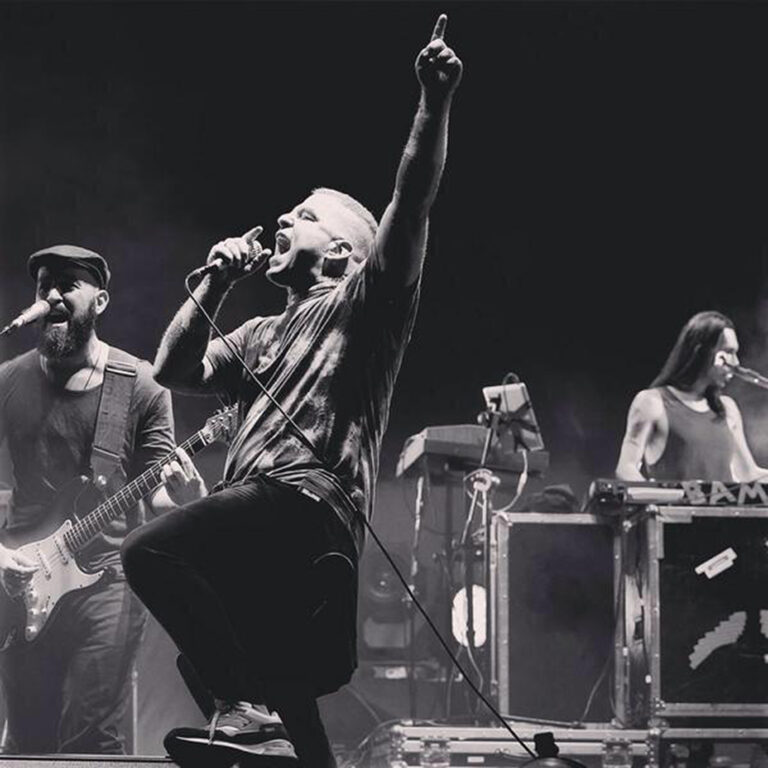
The band became known for their marathon live shows—sweaty, ecstatic affairs that left fans bruised and euphoric. They didn’t just perform songs; they built worlds. Whether playing a midnight festival set or crashing a club stage in Europe, their concerts blurred into communal celebrations that felt ancient and electric at once. Critics began referring to them as a traveling punk carnival, but the truth was closer to a cultural uprising set to a 4/4 beat.
Super Taranta! and Going Global
By 2007, Gogol Bordello had outgrown underground status. Their fourth studio album, Super Taranta!, pushed their fusion even further. Recorded with producer Victor Van Vugt, it was louder, more layered, and even more unhinged. The album roared through Balkan horns, ska rhythms, and punk breakdowns with the kind of energy that could only come from a band that lived on the road. Songs like “Wonderlust King” and “American Wedding” carried Hütz’s philosophy of nomadic freedom, turning immigrant stories into global singalongs. Critics praised the record for capturing the unfiltered electricity of their live shows—a near-impossible feat for a band whose concerts often felt like controlled chaos barely held together by joy.
That same year, Gogol Bordello hit the film world. Hütz starred opposite Elijah Wood in Everything Is Illuminated, a surreal road movie about identity, heritage, and trauma. The band even made an appearance onscreen, performing traditional songs and their own work. Their film presence snowballed from there, appearing in Madonna’s Filth and Wisdom and multiple documentaries, including Gogol Bordello Non-Stop, which chronicled their rise from dive bars to international tours.
Major Labels and Trans-Continental Hustle
In 2010, Gogol Bordello made their major-label debut with Trans-Continental Hustle, produced by Rick Rubin and released on Columbia Records. It marked another evolution for the band, combining their raw punk roots with studio precision. The album drew heavy inspiration from Hütz’s years living in Brazil, adding layers of Latin rhythm and political defiance. “Immigraniada” became an instant rallying cry—a furious ode to immigrant pride that still hits like a revolution chant. Other tracks like “Pala Tute” and “Sun Is on My Side” mixed romanticism with rebellion, blending languages and tempos into one unrelenting global groove.
Despite the leap to a major label, Gogol Bordello refused to tone anything down. They toured relentlessly, sharing stages with everyone from Primus and Cake to Flogging Molly. Their sound might have grown in scope, but their attitude never changed: reckless optimism laced with the energy of people who’ve lived through every kind of border and kept running anyway.
Conflict, Change, and Pura Vida
The years that followed were turbulent but productive. Former guitarist Oren Kaplan sued Hütz in 2012, claiming mismanagement of funds—a public reminder that life in the Gogol Bordello circus was as dramatic behind the scenes as onstage. Still, the music rolled on. Pura Vida Conspiracy dropped in 2013, doubling down on Hütz’s philosophy of liberation through motion. The songs embraced spirituality without losing punk grit, full of Latin and Balkan rhythms wrapped in shout-along anthems. “Dig Deep Enough” and “My Gypsy Auto Pilot” blended optimism and chaos in equal measure.
2017’s Seekers and Finders featured duets with Regina Spektor and marked the band’s most introspective release. It wasn’t mellow, just wiser. Gogol Bordello had survived nearly two decades of border crossings, lawsuits, lineup changes, and world tours, yet their message remained constant: freedom isn’t found in one place—it’s something you drag with you.
Solidaritine and the War in Ukraine
When Russia invaded Ukraine in 2022, Gogol Bordello turned their art into action. Hütz immediately organized benefit concerts and fundraising efforts for humanitarian relief through the nonprofit Nova Ukraine. The band released “Man with the Iron Balls,” a collaboration with Les Claypool of Primus, honoring President Volodymyr Zelensky’s courage. Their 2022 album, Solidaritine, was steeped in that same spirit of defiance and unity. It was less an album and more a battle cry, fusing punk rage with folk resilience. The record proved that the band’s message—chaos as community, rebellion as survival—was still burning strong decades later.
Film and Media Appearances
Gogol Bordello’s cultural footprint extends far beyond their records. They’ve appeared in or contributed music to films like Everything Is Illuminated, Filth and Wisdom, and the 2008 documentary Gogol Bordello Non-Stop. Their music has scored moments in shows such as Fargo, The Tick, and Grimm, and even turned up in Hotel Transylvania 3. In 2023, their story was chronicled in Scream of My Blood: A Gogol Bordello Story, cementing their place as one of punk’s most visually and musically expressive collectives. The band even made a cameo in DC’s 2024 animated series Creature Commandos, playing “American Wedding” in a flashback sequence—a surreal but fitting placement for a group that thrives on breaking expectations.
Why They Still Matter
For Gogol Bordello, punk isn’t about fashion or nostalgia—it’s about survival. Their music turns displacement into art and chaos into communion. Over the years, their lineup has evolved dozens of times, but the soul remains the same: a family built on motion, sound, and relentless joy. Hütz’s voice still cracks with energy, the violin still cuts through like fire, and every show still feels like it might fall apart at any second. That’s the point. Gogol Bordello doesn’t polish their edges; they sharpen them against the world.
Members
- Eugene Hütz – lead vocals, acoustic guitar, percussion (Ukraine, 1999–present)
- Sergey Ryabtsev – violin, backing vocals (Russia, 2000–present)
- Pedro Erazo – percussion, MC (Ecuador, 2007–present)
- Korey Kingston – drums, percussion (2020–present)
- Gil Alexandre – bass, backing vocals (Brazil, 2021–present)
- Erica Mancini – accordion, backing vocals (2023–present)
Discography
- Voi-La Intruder (1999)
- Multi Kontra Culti vs. Irony (2002)
- Gypsy Punks: Underdog World Strike (2005)
- Super Taranta! (2007)
- Trans-Continental Hustle (2010)
- Моя Цыганиада (2011)
- Pura Vida Conspiracy (2013)
- Seekers and Finders (2017)
- Solidaritine (2022)