Good Charlotte
Good Charlotte didn’t just step into the early 2000s pop-punk wave, they surfed it like it was built for them. Hailing from Waldorf, Maryland, the band started as a group of small-town kids with big ambitions and turned into one of the defining acts of the MTV generation. With their sharp hooks, dark eyeliner, and a knack for writing songs that felt both bratty and confessional, they became a voice for every kid stuck in suburbia with dreams bigger than their town could hold.
How the Band Got Started
In 1995, twin brothers Joel and Benji Madden started Good Charlotte with the kind of hunger only high school boredom can produce. They recruited bassist Paul Thomas, who joined after catching one of the brothers’ early acoustic sets, and later added guitarist Billy Martin, whose previous band Overflow had just broken up. The lineup locked in once they found drummer Aaron Escolopio. The band’s name came from a children’s book, Good Charlotte: Girls of the Good Day Orphanage—a weirdly fitting choice for a group of outsiders about to take over TRL.
In their early days, they worked the D.C. and Annapolis club circuit, sharing stages with Blink-182 and Bad Religion before they even had a record deal. They made homemade press kits, mailed out demos, and hustled until Epic Records took notice. In 2000, their self-titled debut arrived, featuring “Little Things,” “Festival Song,” and “Motivation Proclamation.” It didn’t break records, but it set the stage. They were writing about the struggle of growing up broke, watching rich kids glide by, and still dreaming about making it big. For a lot of fans, that honesty hit harder than anything else.
The Breakthrough: The Young and the Hopeless
Good Charlotte went from Warped Tour openers to household names with 2002’s The Young and the Hopeless. It sold nearly five million copies worldwide and gave pop-punk one of its most recognizable anthems: “Lifestyles of the Rich and Famous.” MTV couldn’t get enough of the Madden twins, who suddenly became the faces of a new wave of eyeliner-wearing punk kids who didn’t care if they were on top 40 radio. Singles like “The Anthem,” “Girls & Boys,” and “Hold On” were everywhere. The band leaned into their dual image: rebellious and emotional, sarcastic but sincere.
The album’s sound pulled from Rancid, The Clash, and Green Day, but filtered through a radio-friendly sheen. The choruses were built to be shouted in cars and bedrooms alike, and by the end of 2003, they were headlining arenas and selling out worldwide. Their new drummer, Chris Wilson, brought a tighter backbone to the songs, and the band seemed unstoppable.
The Chronicles of Life and Death and Growing Up in Public
By 2004, the Maddens weren’t just punk’s bad boys—they were full-blown celebrities. Their third record, The Chronicles of Life and Death, reflected that. It was darker, more experimental, and filled with gothic imagery and orchestral arrangements. The band released it in two versions—Life and Death—each with different artwork and bonus tracks. It sold nearly 200,000 copies in its first week and hit No. 3 on the Billboard 200. Songs like “Predictable” and “I Just Wanna Live” kept their pop edge while introducing heavier themes about identity and fame’s fallout.
Good Charlotte toured with Sum 41 and Simple Plan, and their single “Hold On” became an unlikely mental health anthem after the band collaborated with the American Foundation for Suicide Prevention. It showed their growth as songwriters, but also their understanding of their audience—kids who’d been with them since the garage-band days and needed something real to hold onto.
Good Morning Revival and a Change in Direction
After years of touring, Good Charlotte reinvented themselves with 2007’s Good Morning Revival. The band embraced dance-punk influences, mixing in synths and polished production under the guidance of Don Gilmore. The single “The River,” featuring M. Shadows and Synyster Gates of Avenged Sevenfold, signaled their willingness to evolve beyond skate-punk simplicity. “Keep Your Hands Off My Girl” and “Dance Floor Anthem” became global hits, pushing the band into club territory while still carrying the angst that made them famous.
The album sold millions worldwide, and their performances on late-night TV, international festivals, and even the Macy’s Thanksgiving Day Parade made it clear: Good Charlotte had officially gone mainstream. Some fans missed the rawness of their early work, but the band was still finding ways to keep things fresh. They even toured with Justin Timberlake, proving they could fit anywhere from a punk stage to pop royalty’s arena tour.
Cardiology and the Hiatus
By 2010, the band started to circle back to their roots with Cardiology. It was a return to the heart-on-sleeve pop-punk that started it all, packed with songs like “Like It’s Her Birthday” and “Counting the Days.” They described it as their most personal album since The Young and the Hopeless, and for fans who had grown up alongside them, it felt like coming home. Shortly after the release, though, burnout hit hard. In 2011, the band announced an indefinite hiatus, closing out a chapter that had spanned over a decade of chart-topping success.
During the break, Joel and Benji Madden formed The Madden Brothers and explored a more laid-back sound, releasing Greetings from California in 2014. Meanwhile, Billy Martin dove into illustration, and Dean Butterworth worked as a session drummer. For a while, it seemed like Good Charlotte had done their time.
The Comeback: Youth Authority and Generation Rx
In November 2015, Good Charlotte surprised everyone by announcing their return. Their comeback single, “Makeshift Love,” landed like a message to fans who’d been waiting. The band’s sixth album, Youth Authority, arrived in 2016, featuring Kellin Quinn and Simon Neil. It felt like a perfect blend of nostalgia and maturity—still loud, still catchy, but with more perspective. They weren’t chasing trends anymore, they were refining what made them great in the first place.
Two years later came Generation Rx, a darker, more introspective record that tackled themes of addiction, pain, and disillusionment. It was written during a time when the Maddens were reflecting on their careers and the changing world around them. Songs like “Actual Pain” and “Shadowboxer” dug deep into emotional territory, showing a band that had traded youthful defiance for honest vulnerability. It was the most focused and thoughtful album they’d made in years.
Motel Du Cap and Their Modern Legacy
In 2025, Good Charlotte released Motel Du Cap, their eighth studio album. Announced at Welcome to Rockville and led by the single “Rejects,” the record marked another reinvention. While the sound still carried their pop-punk roots, it felt cinematic—layered with alt-rock tones and a sense of maturity earned through decades in the game. After nearly thirty years together, the band still had something to say, and they weren’t leaning on nostalgia to say it.
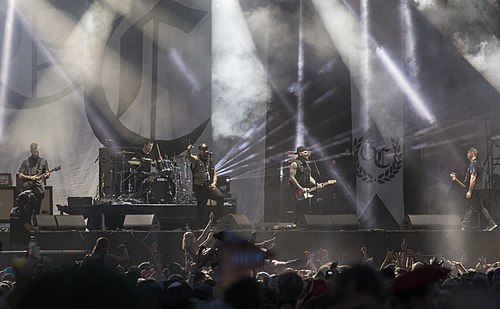
Good Charlotte’s ability to evolve has kept them relevant long after most of their peers faded out. From basement gigs in Maryland to festival headliners and streaming-era survivors, they’ve lived every phase of the modern punk story. Their shows still draw multi-generational crowds—parents who grew up on “The Anthem” and their kids who found them through playlists.
On Screen and On Stage
Beyond their albums, Good Charlotte became part of pop culture itself. They appeared in iCarly: iGo to Japan, had songs in Eurotrip and Not Another Teen Movie, and soundtracked countless MTV moments. Their early days on Total Request Live and tours with bands like Sum 41, Blink-182, and The Used made them fixtures of early-2000s youth culture. Even Waka Flocka Flame teamed up with them for “Game On” in 2015’s Pixels soundtrack, proving their music could still cross generations and genres.
Activism and Controversy
Good Charlotte’s activism has been as loud as their guitars. Guitarist Billy Martin earned PETA’s “Vegetarian of the Year” title in 2012, and the band frequently used their platform to promote animal rights, appearing at PETA’s 25th Anniversary Gala. Their song “Lifestyles of the Rich and Famous” appeared on a PETA benefit compilation, and their videos often featured pro-animal messaging. But the band wasn’t without controversy—fans called them out for appearing in Australian KFC commercials years later, questioning how their activism lined up with fast-food endorsements. The band took the criticism in stride, choosing to focus on music rather than public debate.
Why They Still Matter
Good Charlotte represents a specific kind of endurance. They were never the most hardcore band on the bill, but they made songs that could outlast the trends. Their mix of punk defiance and pop accessibility helped define an era, and their willingness to evolve kept them from becoming a nostalgia act. They’ve influenced everyone from 5 Seconds of Summer to Machine Gun Kelly, even as they continue to write new music on their own terms.
For a band that started with nothing but a dream and a demo tape, Good Charlotte didn’t just survive the changing landscape of punk—they adapted to it, thrived in it, and made it theirs. Whether you discovered them through “The Anthem” blasting on TRL or found them years later through a streaming playlist, the message hasn’t changed: being an outsider never stopped being cool.
Members
- Joel Madden – lead vocals (1995–present)
- Benji Madden – guitar, backing and occasional lead vocals (1995–present)
- Paul Thomas – bass (1995–present)
- Billy Martin – guitar, keyboards (1998–present)
- Dean Butterworth – drums, percussion (2005–present)
Discography
- Good Charlotte (2000)
- The Young and the Hopeless (2002)
- The Chronicles of Life and Death (2004)
- Good Morning Revival (2007)
- Cardiology (2010)
- Youth Authority (2016)
- Generation Rx (2018)
- Motel Du Cap (2025)