MC5
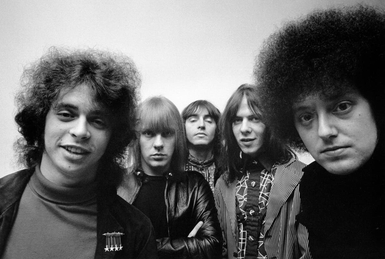
MC5, short for Motor City Five, were an American rock band formed in Lincoln Park, Michigan in 1963. The classic lineup featured vocalist Rob Tyner, guitarists Wayne Kramer and Fred “Sonic” Smith, bassist Michael Davis, and drummer Dennis Thompson. They built their name on volume, speed, and live shows that sounded like the amps were trying to leave the building.
How The Band Got Started
The roots of MC5 trace back to the friendship between Wayne Kramer and Fred Smith. They were teenagers who loved R&B, blues, Chuck Berry, surf rock, and the fast, rough-edged rock that later got labeled garage. Each ran their own group, then the most committed players eventually combined into a working band that could actually make a living gigging around Detroit.
As the lineup shifted, the band crossed paths with Rob Derminer, who briefly tried the bass role before everyone realized his real strength was up front. He became their lead singer, took the name Rob Tyner, and helped lock in the identity that would become MC5.
Detroit Gigs, Fast Reps, And A Locked-In Lineup
Tyner coined the name MC5 as a nod to their Detroit roots, and the group quickly became a regular presence around the city. By the mid-1960s the core lineup stabilized with Michael Davis on bass and Dennis Thompson on drums, alongside Kramer, Smith, and Tyner.
They played constantly, built a loyal local following, and developed a reputation for shows that felt more like a controlled collision than a polite performance. If you left calm, you probably showed up late.
Sound: Loud Rock With A Left Turn Into Jazz
MC5’s playing leaned hard on back-to-basics rock and roll, but Kramer and Smith also pushed toward free jazz ideas. They were drawn to artists like Sun Ra and late-era Coltrane, and tried to translate that intensity into guitar interplay. The result was a distinctive two-guitar attack, with Kramer’s lead work and Smith’s rhythm parts locking together in a way that sounded urgent, sharp, and sometimes barely contained.
Singles Before The Big Break
In 1967, MC5 released a single pairing a cover of “I Can Only Give You Everything” with their own “One of the Guys.” In 1968 they put out more original material, including “Borderline” and “Looking at You,” and those records helped push them beyond Detroit. Touring began to widen the band’s reach, and their reputation for overpowering live sets followed them.
Politics, Sinclair, And The Live Wire Era
As their profile grew, MC5 became closely tied to Detroit’s radical politics through John Sinclair and his Trans-Love Energies operation. The band’s message and presentation leaned openly anti-establishment, and their shows could be confrontational by design. They also performed during the 1968 Democratic National Convention protests in Chicago, a moment that cemented their image as a band connected to the turbulence of the time.
Kick Out The Jams And National Attention
MC5’s debut album, Kick Out the Jams, was recorded live at Detroit’s Grande Ballroom on October 30 and 31, 1968, then released in January 1969. The record captured the band’s calling card: a high-energy, no-polish performance style that felt immediate and loud enough to redraw the room’s walls.
The title track created immediate controversy because of its famous shout. An edited version also circulated for broader play. The blowback extended beyond radio, and the resulting label drama eventually pushed MC5 out of their deal and into a new chapter.
Atlantic Records And The Two Studio Albums
After leaving their first major label situation behind, MC5 signed with Atlantic Records and released Back in the USA in 1970. The album was a sharp pivot in production and presentation, and it delivered tight, short, hard-edged rock that many listeners point to as a blueprint for what punk would soon prioritize.
The next year, they released High Time (1971). The band had more control on this one, stretched into longer forms, and leaned into a broader range of ideas. Over time, High Time has been treated as a key piece of their catalog, even if it did not get the promotion their earlier momentum suggested it deserved.
Breakup And The Last Studio Tracks Of The Original Run
By 1972, the band’s relationship with their label had deteriorated and the group was worn down by constant touring and heavy drug use. They toured Europe, cycled through bass players after Michael Davis left, and recorded a final batch of songs in London connected to a film project. A farewell show at the Grande Ballroom on December 31, 1972 marked the end of the original MC5 era.
Life After The Split
After MC5 ended, members moved in different directions. Fred “Sonic” Smith formed new projects, later married Patti Smith, and stepped away from music for long stretches. Wayne Kramer continued making music in other contexts, faced incarceration tied to drug offenses in the mid-1970s, then returned to recording and performing years later. Rob Tyner worked as a producer, manager, and promoter in Detroit until his death in 1991. Dennis Thompson and Michael Davis kept playing in various projects over the years.
Reunions, DKT, And Guest-Filled Shows
MC5 reappeared publicly in 1992 for a concert honoring Rob Tyner. In 2003, surviving members performed again, often with guest vocalists and musicians filling out the sound. A touring version under the name DKT/MC5 (for Davis, Kramer, and Thompson) followed, and later a more stable lineup formed with vocalist Handsome Dick Manitoba and guitarist Gilby Clarke joining Kramer, Davis, and Thompson.
That era lasted until Michael Davis died in 2012, after which the band’s activity slowed and shifted again.
Final Years, Hall Of Fame Honor, And Heavy Lifting
In 2018, Kramer launched the MC50 tour to mark the 50th anniversary of Kick Out the Jams, using a lineup of well-known players from other bands to recreate the power of the original era onstage. In 2022, Kramer announced a new touring concept under the banner “We Are All MC5” and spoke about a new studio album produced by Bob Ezrin, with Dennis Thompson appearing on a couple of tracks.
Wayne Kramer died on February 2, 2024. MC5 were inducted into the Rock and Roll Hall of Fame in 2024 in the Musical Excellence category. Dennis Thompson died on May 8, 2024. The band’s final album, Heavy Lifting, was released on October 18, 2024.
Members
- Rob Tyner, vocals (died 1991)
- Wayne Kramer, guitar, vocals (died 2024)
- Fred “Sonic” Smith, guitar, vocals (died 1994)
- Michael Davis, bass, backing vocals (died 2012)
- Dennis Thompson, drums (died 2024)
Discography
- Kick Out the Jams (1969, live)
- Back in the USA (1970)
- High Time (1971)
- Heavy Lifting (2024)