Killing Time
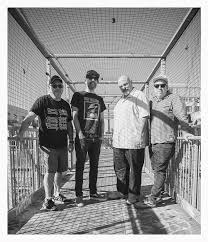
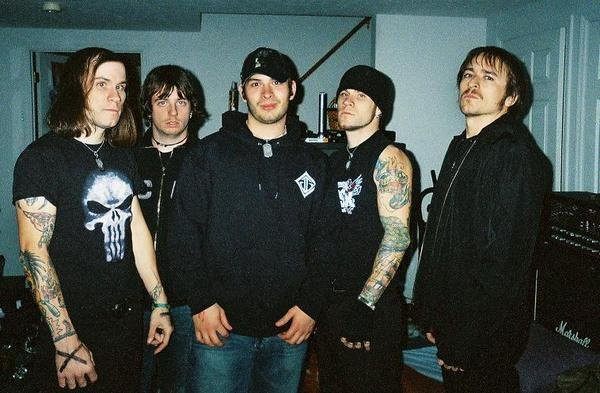
Killing Time is a New York hardcore band that began in 1988 under the name Raw Deal, put out a run of albums, EPs, singles, and compilation tracks, then went through multiple breaks before ending their first run in 1998 and returning to play and tour again starting in 2005.
Raw Deal roots
Raw Deal formed in 1988 when Carl Porcaro, Rich McLoughlin, and Anthony Drago split from their previous band Breakdown. They brought in vocalist Anthony Comunale, formerly of Token Entry, and guitarist Mike Sentkiewitz, formerly of Sick of It All, to complete the early lineup.
Demo tapes, early shows, and a record deal
The band recorded a demo cassette and started playing venues around New York City, including CBGB, which hosted many hardcore punk acts at the time. After a show at The Ritz, Raw Deal signed with In Effect Records and prepared to record a first full length album.
The name change and the Brightside sessions
Mike Sentkiewitz left, and the band changed their name to Killing Time after a heavy metal band with the same name threatened legal action. Killing Time entered Normandy Sound in Warren, Rhode Island with producer Tom Soares, who had been involved with recording Cro Mags’ Best Wishes and Gang Green’s Older… Budweiser. As a four piece, they re recorded some demo tracks and added new material, leading to Brightside, released in November 1989 on In Effect Records.
That same year, Blackout Records released the New York hardcore compilation Where the Wild Things Are, which included two Killing Time tracks, “Backtrack” and “Brightside.”
Early lineup change and a West Coast one off
After Brightside came out, Rich McLoughlin wanted to switch from bass to guitar, but the rest of the band rejected the move. McLoughlin left and Alex Gopian, formerly of Inside Out, took over on bass.
The band played a show in California, described as their first and last West Coast show in the United States. That appearance led to the 7 inch single East Meets West, which included the Killing Time track “Wall of Hate” along with tracks by Sick of It All, Vision, Carry Nation, and Point Blank.
A quiet stretch, then Happy Hour
For much of the period after Brightside, the band was largely inactive and did not record or tour. In late 1991, Rich McLoughlin returned as a second guitarist and the band recorded the four song EP Happy Hour, released in July 1992 on Blackout Records. In Europe, it was released on Semaphore Records as a 12 inch, paired with previously unreleased demo material recorded before the band signed with In Effect.
Stepping away in 1992
In 1992, the band took a break after a negative reception to Happy Hour and broader issues tied to violence around the New York hardcore community. During this period, members moved into other work: Porcaro and McLoughlin started the Rope A Dope record label, Gopian joined the hip hop group Justice System, Drago became a police officer in White Plains, New York, and Comunale entered the financial sector.
The 1994 European tour lineup
Killing Time reformed briefly in 1994 for a European tour, but Comunale could not return due to job commitments and Justice System had signed to MCA Records. Dave Franklin of Vision handled vocals and Lars Weiss, formerly of Judge and Uppercut, played bass. The unfamiliar lineup and appearance drew mixed reviews from the European music press, and the band went on hiatus again.
Back on Blackout with Unavoidable
Comunale returned and Sean O’Brien joined on bass. In March 1995, the band entered the studio and released the Unavoidable EP on Blackout Records. They also recorded a cover of the Sex Pistols song “Bodies” for the compilation Punk Rock Jukebox. Around the same time, Brightside was re released in both the United States and Europe.
The Method and the end of the first era
In June 1996, the band recorded their second album at LoHo Studio in New York City, and by August the sessions were complete. The Method was released in April 1997 and is described as returning to the harder approach associated with Brightside, while also adding a more melodic and intricate edge through short guitar solos.
Despite the success of The Method, Killing Time played their last show in Newburgh, New York in 1997 and formally ended the band’s first run in 1998, after what the bio describes as three hiatuses over the years.
Reunion dates and tours after 2005
In May 2005, Killing Time played two reunion shows at Northsix in Brooklyn on a bill that included The Slumlords. The band was scheduled to headline the final day of Posi Numbers Festival in July 2005 but did not play after the event was shut down hours before their set due to a fight. They were also scheduled for Hellfest in New Jersey in August 2005, which was canceled indefinitely.
In summer 2006, the band brought in Chris Skowronski, an Uppercut guitarist and longtime friend, on bass. After New York area shows, they toured Europe in fall 2006, then played local dates and headed to Asia in November 2007 for a two week run in Japan and South Korea.
Writing again and Three Steps Back
In winter 2008, motivated by the response to the Asia tour, the band discussed writing new material for the first time since 1996, using Drago’s parents’ garage as a workspace. In spring 2009, they finalized 12 songs for a third LP. The album, titled Three Steps Back, was recorded in July 2009 at Electroluxe Studios in Brooklyn and released on Dead City Records in February 2010.
Additional credits
In 2003, Carl Porcaro contributed additional guitar work on a cover of “Tell Tale” by Ensign for their album Love the Music, Hate the Kids.
Members
- Anthony Comunale, vocals (1988 to 1992, 1995 to 1998, 2005 to present)
- Carl Porcaro, guitar (1988 to 1992, 1994, 1995 to 1998, 2005 to present)
- Anthony Drago, drums (1988 to 1992, 1994, 1995 to 1998, 2005 to present)
- Christopher Skowronski, bass (2006 to present)
Previous members
- Rich McLoughlin, bass (1988 to 1990), guitar (1991 to 1992, 1994 to 1998, 2005 to 2020), died 2020
- Mike Sentkiewitz, guitar (1988 to 1989)
- Sean O’Brien, bass (1995 to 1998, 2005 to 2006)
- Alex Gopian, bass (1990 to 1992)
- Dave Franklin, vocals (1994)
- Lars Weiss, bass (1994)
Discography
- Brightside (album, November 1989, In Effect Records)
- Happy Hour (EP, July 1992, Blackout Records)
- Unavoidable (EP, March 1995, Blackout Records)
- The Method (album, April 1997, Blackout Records)
- Raw Deal demo EP (EP, May 2005, Dead Serious Records)
- Three Steps Back (album, February 2010, Dead City Records)
Singles
- East Meets West (7 inch, 1991, Nemesis Records), includes “Wall of Hate,” tied to the California show
- Killing Time / Profound Effect (7 inch split, details not specified in the bio), contains “Fools Die”
Compilation appearances
- Where the Wild Things Are (1989, Blackout Records), “Backtrack” and “Brightside”
- Punk Rock Jukebox (1995, Blackout Records), Sex Pistols cover “Bodies”
- Satisfaction Guaranteed (Nawpost Records), Major Conflict cover “Outgroup”
- Creepy Crawl (1997, Another Planet), “Fools Die” live
Reissues
- Happy Hour (12 inch EP, 1992, Blackout and Semaphore Records), European import with a second Raw Deal demo
- Brightside (1995, Lost & Found), contains the Happy Hour EP
- Brightside (1995, Victory Records), contains the Happy Hour EP and the first Raw Deal demo