Crass
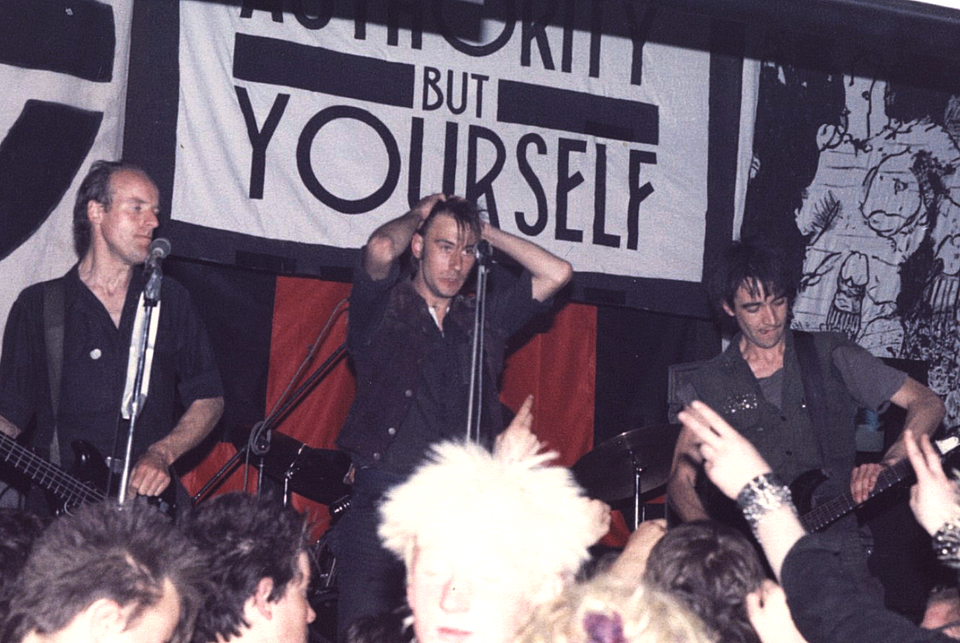
Crass was an English punk rock band known for their anarchist ideology and unique, politically charged music. The band was rooted in anarchist beliefs, promoting political resistance, animal rights, feminism, anti-fascism, and environmentalism. Known for their distinctive approach, Crass advocated a DIY ethic in their music, albums, sound collages, and films, challenging authority and encouraging direct action. Their visual and performance art, often featuring controversial imagery, emphasized their critique of societal structures and the punk subculture itself.
How The Band Got Started
Crass formed at an anarchist commune in a 16th-century cottage called Dial House, near Epping, Essex. Penny Rimbaud, who had a background in avant-garde performance art, began jamming with Steve Ignorant, a fellow anarchist and punk enthusiast. Ignorant was inspired by seeing the Clash live and decided to start a band, which led to the creation of Crass. Initially, the duo performed with minimal equipment, producing tracks like “So What?” and “Do They Owe Us a Living?”. The name “Crass” was chosen as a reference to a line in David Bowie’s song “Ziggy Stardust” (“The kids were just crass”).
Other members soon joined, including Gee Vaucher, Pete Wright, N. A. Palmer, and Steve Herman. They played their first live gig at a squatters’ street festival in North London. Despite facing a rocky start, including a canceled performance at the Roxy Club, Crass quickly gained notoriety for their intense music and radical approach. They dressed in black, military-style clothing, and used provocative stage imagery to convey their anti-authoritarian message, which often included a mix of symbols like the Christian cross, the swastika, and the Union Jack.
Reformation and The Insidious Lie (2003-present)
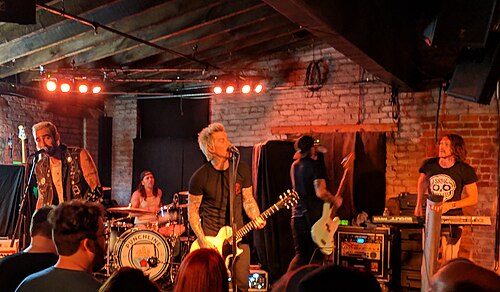
In 2003, Crass reformed with members Ted Bond, Scott Hrapoff, and Heath Konkel at the core, alongside new guitarist Sam Prather. The band released the EP E.P.idemic in 2004. However, after some lineup changes, Ted took on rhythm guitar duties, and in 2006, Glade Wilson joined the band as a guitarist. Crass’ third album, The Insidious Lie, was recorded between 2009 and 2010, with the band funding the project themselves. The album was released in 2011 and followed by a European tour. In 2013, they also released a compilation of their early material, The Early Years.
Crass continued to perform and tour in support of The Insidious Lie through 2014. The band’s engagement with new music continued with their 2017 release of “Meilynn’s Song” for the IndieVision Music compilation and the 2019 release of their EP Devils In The Details.
Music Style and Influences
Crass’ music was a blend of aggressive punk rock and experimental elements, characterized by a DIY approach and politically driven lyrics. Their sound evolved from the raw hardcore punk of their early releases to a more experimental approach, incorporating spoken word, avant-garde influences, and even classical music. While the band drew inspiration from punk pioneers, their music was also shaped by avant-garde composers such as John Cage and Karlheinz Stockhausen, as well as free jazz and European atonality.
Discography
Albums
- The Feeding of the 5000 (LP, 1978, Small Wonder Records – UK Indie No. 1, reissued in 1980)
- Stations of the Crass (LP, 1979 – UK Indie No. 1)
- Penis Envy (LP, 1981 – UK Indie No. 1)
- Christ – The Album (LP, 1982 – UK Indie No. 1)
- Yes Sir, I Will (LP, 1983 – UK Indie No. 1)
- Ten Notes on a Summer’s Day (12″, 1986 – Crass Records – UK Indie No. 6)



Crass is by far one of my favorite bands of all time!